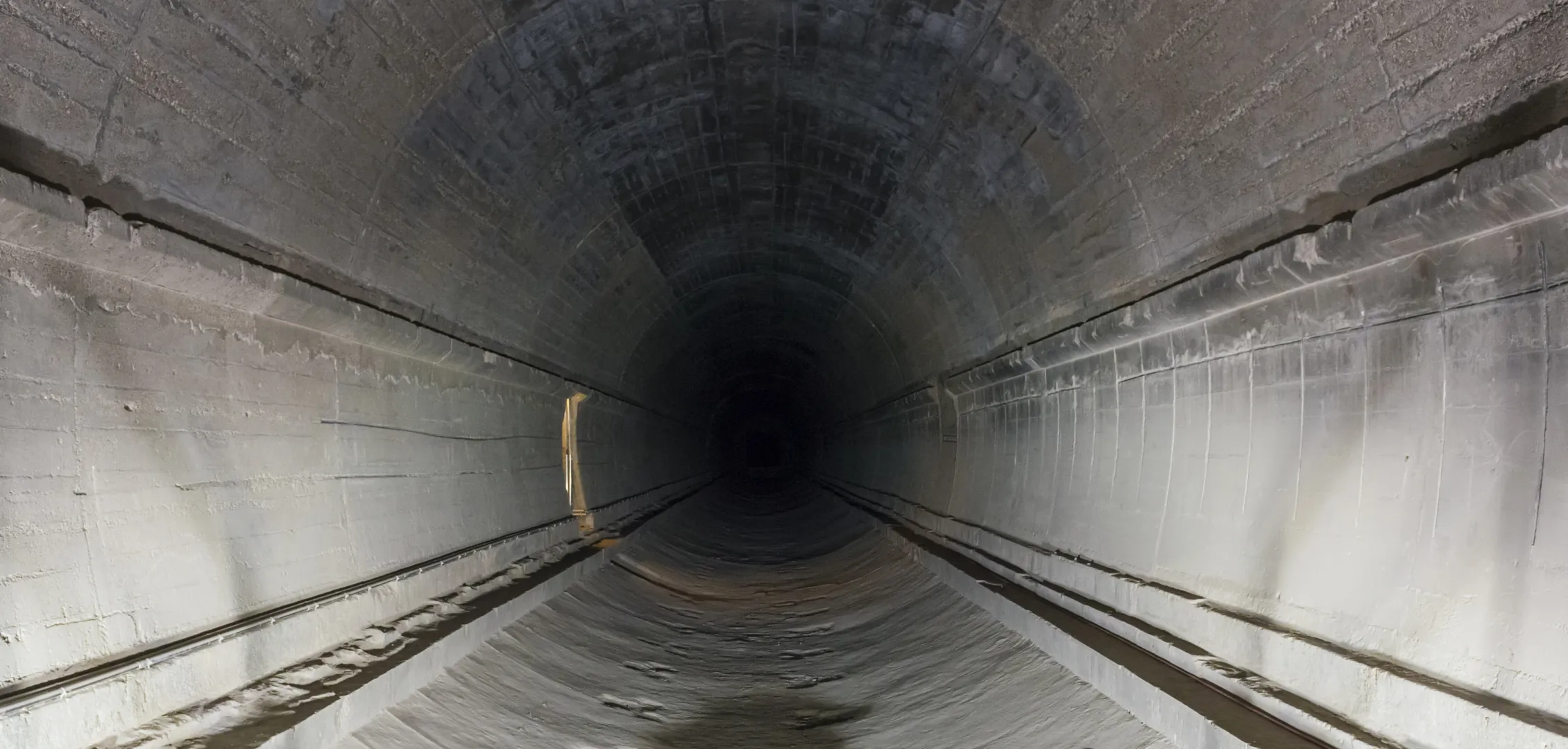
Underground tunnel in concrete

MAXIMA

The southern wastewater tunnel

Tunnels beneath Malmö

Wastewater tunnels beneath Malmö leading to the Sjölunda wastewater treatment plant creates the conditions for a modern, efficient, and operationally reliable wastewater treatment system that meets the needs of a growing population and protects nearby aquatic environments.

The wastewater tunnel from Turbinen in central Malmö to the Sjölunda wastewater treatment plant will be a main tunnel approximately 5.5 kilometers long, bored at a depth of 20–35 meters, along with two connecting microtunnels with a total length of about 2.4 kilometers.

The wastewater will be conveyed by gravity to the treatment plant, where a new large pumping station will pump the wastewater up to the treatment facility.

Main tunnel
Location: From Turbinen in Malmö to Sjölunda wastewater treatment plant
Length: 5.5 kilometres
Placing: 2035 metres below ground
Internal diameter: 5 metres
Storage capacity: 100 000 cubic metres
Technical lifespan: 100 years

Microtunnels
Length: A total of 2.4 kilometres
Placing: 15–25 metres below ground 
Internal diameter: 2 metres

Sjölunda pumping station
Capacity: 10 cubic metres per second
Location: Next to Sjölunda wastewater treatment plant
Functionality: Will pump the wastewater from a depth of 35 metres up to the treatment plant

Shafts
Number: 11 shafts along the tunnel route
Size: The shaft closest to Sjölunda is 45 metres in diameter for building the new pumping station and the others are 415 metres in diameter
Depth: 15–40 metres down in the ground
Application: Tunnelling, evacuation during the construction phase, connection of the existing pipe network, construction of a new pumping station and access for operation and maintenance

The tunnels will be built in four stages – here’s how it works and how the surroundings are affected

Karta över avloppstunnel Söder med schakt namn

Overview of the wastewater tunnel beneath Malmö.

Wastewater tunnels – an increasingly common solution

In densely populated communities in regions with strong population growth, wastewater tunnels are becoming increasingly common. In the Nordic countries, wastewater tunnels already exist or are planned in cities like Copenhagen, Stockholm, Gothenburg, Oslo and Helsinki. In Copenhagen, tunnels are drilled using the same technology planned for MAXIMA and in comparable geological conditions.

Benefitting both growth and the environment

Wastewater tunnels beneath Malmö will replace parts of the pipe network through which the wastewater currently passes on its way to the Sjölunda wastewater treatment plant. Today, these sections consist of pressurised pipes and pumping stations with limited capacity and functionality.

This creates opportunities for urban development and population growth. The tunnel’s storage capacity will protect the community during heavy rainfall and minimise the need for overflow discharge into Malmö’s canals and the Öresund.

The community and environmental benefits:

  • Robust, long-term sustainable transfer of wastewater from Malmö to Sjölunda wastewater treat-ment plant with higher capacity to meet population growth
  • Greater opportunities for urban development and land use, as the wastewater tunnel is constructed deep underground
  • Reduced need for service and maintenance within the wastewater infrastructure
  • Minimised need for overflow discharge of untreated wastewater from an overloaded system, into Malmö’s canals and the Öresund
  • Reducesd risk of basement flooding in areas adjacent to the three major pumping stations: Turbinen, Rosendal, and Spillepengen
  • The tunnel’s storage capacity makes it possible to regulate wastewater flows, allowing the Sjölunda wastewater treatment plant to be expanded more efficiently and to operate optimally at all times

Learn more
Overflow discharge occurs when the pipe system is overloaded. Untreated water is then released into the sea, rivers or canals.
Read more about overflow discharge here