MAXIMA
FAQ
A regional solution for several municipalitie
Why is MAXIMA needed?
Just like in the rest of the country, southwest Skåne's water and wastewater infrastructure is now old and needs to be upgraded, while we are seeing an increase in population in the region. In addition, treatment requirements are becoming increasingly stringent and the entire society needs to adapt to climate change. VA SYD is taking on this challenge by building the regional wastewater treatment system MAXIMA, so that we can live and work here into the future.
Read more about the benefits MAXIMA brings to society and the environment
What does MAXIMA include?
The MAXIMA wastewater treatment system includes several parts – a new Sjölunda wastewater treatment plant in Malmö with new outfall pipelines into the Öresund, a new large Sjölunda pumping station, a wastewater tunnel beneath Malmö as well as a wastewater tunnel from Lund, and a pressurised transfer pipe from Borgeby.
For which municipalities is MAXIMA built?
The MAXIMA wastewater treatment system is designed to meet the wastewater treatment needs of the municipalities of Burlöv, Lomma, Lund, and Malmö, as well as to receive wastewater from parts of the municipalities of Staffanstorp and Svedala.
Why does VA SYD choose a regional solution over local expansion?
Large investments are necessary for our region to be able to grow and function without negative impacts on our health and environment and to meet increasingly stringent environmental requirements. Building a new, large wastewater treatment system instead of maintaining several, smaller plants means that expertise and resources can be optimised, which provides greater benefit at lower cost for each municipality.
In addition, the location of the Sjölunda wastewater treatment plant is suitable in terms of both the impact on the water environment and urban development. By expanding the Sjölunda wastewater treatment plant, we are modernising wastewater treatment in all the participating municipalities. This means that smaller, local wastewater treatment plants can be phased out, and the areas can be used for other purposes.
Why doesn't VA SYD invest in property-based wastewater technologies instead?
There is no contradiction between developing the main system for a regional wastewater treatment and new sewage technologies. However, it is important to understand that the infrastructure that we have today, and on which we are completely dependent, has been built up over a century. This needs to be maintained, renewed and adapted to new requirements. Rebuilding this infrastructure to something else, such as property-based solutions, would take a very long time and entail costs that are difficult to predict, since the technical solutions do not exist on a larger scale today. Regardless of how development progresses, we need a complete, sustainable and robust system that will last over time.
How safe and secure is a large central solution compared to several smaller plants?
By combining expertise and financial resources, VA SYD is working to ensure that MAXIMA becomes a robust and resilient system capable of meeting the challenges of both a growing population and climate change. We are incorporating solutions that protect against operational disruptions and investing in backup systems that will enable the system to continue treating wastewater even if a disruption occurs.
We also take the broader security environment into account, recognising a changing threat landscape with an increased risk of sabotage targeting essential public services and critical infrastructure. We address these risks through a systematic approach to security and emergency preparedness, both during the planning phase and throughout the construction phase.
How was the formal decision to build MAXIMA made?
In the spring of 2024, an investment agreement for MAXIMA was approved by the municipalities concerned, Burlöv, Lomma, Lund and Malmö, which made it possible for the VA SYD federal council to make an implementation decision in June 2024.
What will MAXIMA cost and who will pay?
Building the MAXIMA wastewater treatment system is estimated to cost SEK 17.5 billion by 2035. The cost will be distributed in a fair and sustainable manner between the municipalities that benefit from the system. A cost distribution has been decided in an investment agreement between the respective municipal councils in the municipalities of Burlöv, Lomma, Lund and Malmö.
The maintenance of the country's water and wastewater management has long been neglected, and today faces a significant investment need. Regardless of the implementation of MAXIMA, the tariff (your water bill) will need to be increased gradually, possibly doubling within 20 years, according to the industry association Svenskt Vatten. You can read more about this in Svenskt Vatten’s 2023 investment report.
The principle for the entire management of wastewater, drinking water and waste is that it is the customers who pay through a decided fee. The cost-effectiveness principle prevails, and this is therefore not a profit-making business.
How is the investment divided between the participating municipalities?
On 18 June 2024, VA SYD’s Joint Council adopted an implementation decision for MAXIMA with a framework budget of SEK 17.5 billion (price level January 2024). Of this amount, the City of Malmö finances SEK 14.5 billion, the Municipality of Lund SEK 2.8 billion, and the Municipality of Lomma SEK 166 million.
The financing model follows the main principle of VA SYD’s statutes, which states that the municipality in whose area the investment is made is primarily responsible for the financing. With regard to the northern wastewater tunnel, this involves the transfer of wastewater mainly from the Municipality of Lund, even though it will largely pass beneath the Municipality of Burlöv. This therefore constitutes an exception to the main principle and is financed by the Municipality of Lund.
The framework budget is presented below, broken down by municipality and facility part.
City of Malmö
Sjölunda wastewater treatment plant SEK 10,134 million
Southern wastewater tunnel SEK 3,236 million
Microtunnels Malmö SEK 276 million
Sjölunda pumping station SEK 890 million
Municipality of Lund
Northern wastewater tunnel SEK 2,797 million
Municipality of Lomma
Transfer pipe from Borgeby SEK 166 million
When will MAXIMA be ready?
The MAXIMA wastewater treatment system is expected to be operational by 2035.
Impact on society and environment
What does MAXIMA mean for societal development?
In addition to the fact that the construction of MAXIMA itself generates a large number of jobs in the region, a functioning and safe sewage treatment system contributes to increased quality of life for a growing population, a strong and competitive business sector and sustainable economic growth.
How will MAXIMA impact on the aquatic environment?
In the operational phase, the new wastewater treatment system will mainly affect our aquatic environments in two ways:
The new treatment technology at the Sjölunda wastewater treatment plant and new outfall pipelines further out into the Öresund, will enable great improvement of our aquatic environments. Today, the existing outfall pipeline discharges near the coast into more stagnant water in Lommabukten, so the impact will be greatly reduced. In addition, when local plants can be closed, the discharges into rivers flowing into Lommabukten, will be reduced.
The second environmental impact is related to overflow discharges, occuring when the volume of water exceeds the capacity of the system, causing untreated wastewater to be released into the nearest watercourse for safety reasons. With MAXIMA the overflow discharges will be minimised through the entire system, and never from the Sjölunda wastewater treatment plant itself. The MAXIMA system will be able to handle a exceptional rainfall events.
How will the construction of MAXIMA affect our living environments?
The investigations that have been carried out show that the impact on the surroundings during the construction phase is limited in terms of both scope and time. The construction methods VA SYD plans to use are well-proven, and involve limited impact in terms of noise, vibrations and groundwater. To further reduce the impact, we are planning various protective measures such as noise barriers and treatment of water before it is released into ditches or waterways.
Communication with property owners
When will I be contacted if my property is affected?
Before VA SYD starts building the wastewater tunnels and new pipes to connect the municipalities, we will sign land grant agreements with the property owners of developed and undeveloped properties along the route in question. This agreement regulates, among other things, where the tunnels and pipes will be located and what compensation landowners will receive.
VA SYD will contact each individual property owner by letter to present the land grant agreement. We will also provide information about the principles applicable when we value and compensate property owners for encroachment and the impact of construction of the tunnels/pipes. We always endeavour to reach an agreement with property owners. By signing a land grant agreement, property owners authorise the construction of the tunnel/pipe along a specific route. The land grant agreement gives VA SYD the right to build and manage the new infrastructure. The agreement governs the conditions that will apply when we, as the tunnel/pipe owner, make use of the land, and the compensation principles that will apply to encroachment and settlement of any damage. Based on the land grant agreements, VA SYD will commission Lantmäteriet to decide on utility easements. A utility easement means that the terms of the agreements are converted into a legal right that is clearly documented in the land register and the register map belonging to the land register.
What compensation will I receive if my property is affected?
VA SYD offers affected property owners a one-off compensation, which is based on an assessment of what the encroachment on the property is worth. The principles for compensation are regulated in the Expropriation Act, which states that the property owner shall receive compensation based on an assessed decrease in market value plus a surcharge of 25 percent.
What kind of compensation will I receive if my property is affected by the wastewater tunnel?
VA SYD offers affected property owners a one-off payment of compensation. This is based on an assessment of the value of the encroachment on the property. The principles of the compensation are regulated in the Expropriation Act, which states that the property owner must receive compensation based on an assessed reduction in market value plus a 25 per cent surcharge.
How will my property be affected by noise and vibration during construction?
Since the tunnels are drilled at a depth of 20–35 metres, VA SYD's assessment is that no existing buildings in the area above the tunnel route will be affected, either during the construction phase or later. The construction methods we plan to use are well-proven and involve limited impact in terms of noise, vibrations and groundwater.
How does VA SYD find out if my property is at risk of being damaged by the tunnel construction?
Before work begins, a systematic inventory of all properties along the entire work area is carried out. Based on the inventory, a risk assessment is made that takes into account:
- Possible settlements and cracking of buildings and facilities
- Existing ground conditions
- The foundations and structural design of the properties
This gives VA SYD a clear picture of which properties may be sensitive and need extra attention.
How does VA SYD monitor the impact of the tunnel drilling continuously during the construction period?
For properties near the work area, specific guideline values for vibrations are calculated. The calculations are carried out in accordance with Swedish standard SS 02 52 11, which regulates guideline values and measurement methods for vibrations in buildings caused by planned work. Each property is thus given an individually adapted limit value based on its conditions.
Continuous measurement and monitoring will then take place throughout the construction period:
- Vibration meters are installed on selected properties and follow the tunnel boring machine along the entire route, so that VA SYD can continuously assess the impact and spread of vibrations
- Measurement points (studs) for settlement measurement are installed, and a zero measurement is carried out as a reference before work starts
For properties identified as risk objects, an individual control plan is drawn up, which specifies:
- Alarm values – levels at which VA SYD immediately increases monitoring and takes precautionary measures
- Stop values – levels at which work is paused and measures are implemented before it is resumed
- What concrete measures are taken if the values are exceeded
Who does the inspection and how is it carried out?
Properties that are considered sensitive to settlements or vibrations are inspected before work begins, as close to the start of construction as possible. The inspection is carried out by an independent inspection company in accordance with Swedish standard SS 460 48 60 and is documented in a detailed report. The purpose is to ensure an objective basis that clearly shows the condition of the property before construction work begins.
When work in connection with a property is completed, a post-inspection is carried out for all properties that have been pre-inspected. Any damage that may have occurred during the construction period is identified, assessed and documented. Property owners, contractors and VA SYD thus have a complete basis for assessing whether and how a property has been affected.
How will I be compensated for any damage due to the tunnel construction?
Based on the inspection documentation, you will be compensated for the damage that is considered to have been caused by the wastewater tunnel construction.
Does VA SYD have insurance?
VA SYD has taken out what is known as an owner-controlled construction insurance policy, which means that we, rather than the contractor, are responsible for the insurance. The insurance covers the contractor’s work on constructing the wastewater tunnel, as well as its commissioning. It also covers damage caused by the construction of the tunnel, for example to third-party houses, buildings and land.
Claims for damage should be reported to VA SYD, who will handle the claims process through our insurance company and compensate for damage that is determined to have been caused by the construction of the wastewater tunnel.
Once the tunnel has been completed and put into operation, VA SYD will also be responsible for the necessary insurance to be in place for the wastewater tunnel and its operation.
Permit process
What permits does VA SYD need to build and operate MAXIMA?
Permit according to the Environmental Code
In order to build and operate the MAXIMA wastewater treatment system, VA SYD must obtain a permit according to Chapters 9 and 11 of the Environmental Code, which is the legislation that regulates activities with an impact on health and the environment. An application for a permit is submitted to the Land and Environmental Court that handles cases concerning environmental and water issues in the region, in VA SYD's case Växjö. They make an assessment of whether the construction and operation of the new wastewater treatment system is compatible with environmental protection laws.
Permit according to the Continental Shelf Act
In order to build new outfall pipelines into Öresund, VA SYD also needs a permit according to the Continental Shelf Act. The application is submitted to the government, which sends it for consultation, prepares it and makes a decision.
What is the process for obtaining a permit according to the Environmental Code?
The proceeding at the Land and Environmental Court (MMD) is expected to take approximately two years. When the court receives the application, they first assess whether it needs to be supplemented in any way. When the application is complete, they make a an announcement in the local press. Then a consultation period begins when interested parties, the public, municipalities, the county administrative board and other authorities are given the opportunity to take part in the plans for MAXIMA and express their views in the case. VA SYD will respond to the opinions that are received. Then the court holds a main hearing that is open to everyone, probably in Malmö.
The application for a permit results in a judgment stating whether the operation may be carried out or not and what conditions apply to the permit. The judgment can be appealed to the Land and Environmental Court of Appeal by anyone affected by the operation. The deadline for appealing is stated in the judgment.
How can I access information and provide my comments?
Anyone can access information and express their views during the consultation, the court's referral period and the main hearing.
- Consultation is an important part of the permit application, as it gives stakeholders the opportunity to influence by submitting their views. All parties that may be affected are invited to the consultation, via mailing and advertising. When the consultation period is over, a consultation report is compiled that contains the opinions and views received, including the response and a report on consultation meetings with stakeholders. This is then included as part of the application. Read more about this here
- When the Land and Environmental Court considers an application to be complete, this is announced in the local press. This begins a referral period, when any stakeholder can submit their views to the court. VA SYD is given the opportunity to respond to these views.
- All stakeholders are also welcome to the main hearing.
Where can I find the application documents?
The application documents are available in Swedish here.
Sjölunda wastewater treatment plant
Why does the Sjölunda wastewater treatment plant need to be rebuilt?
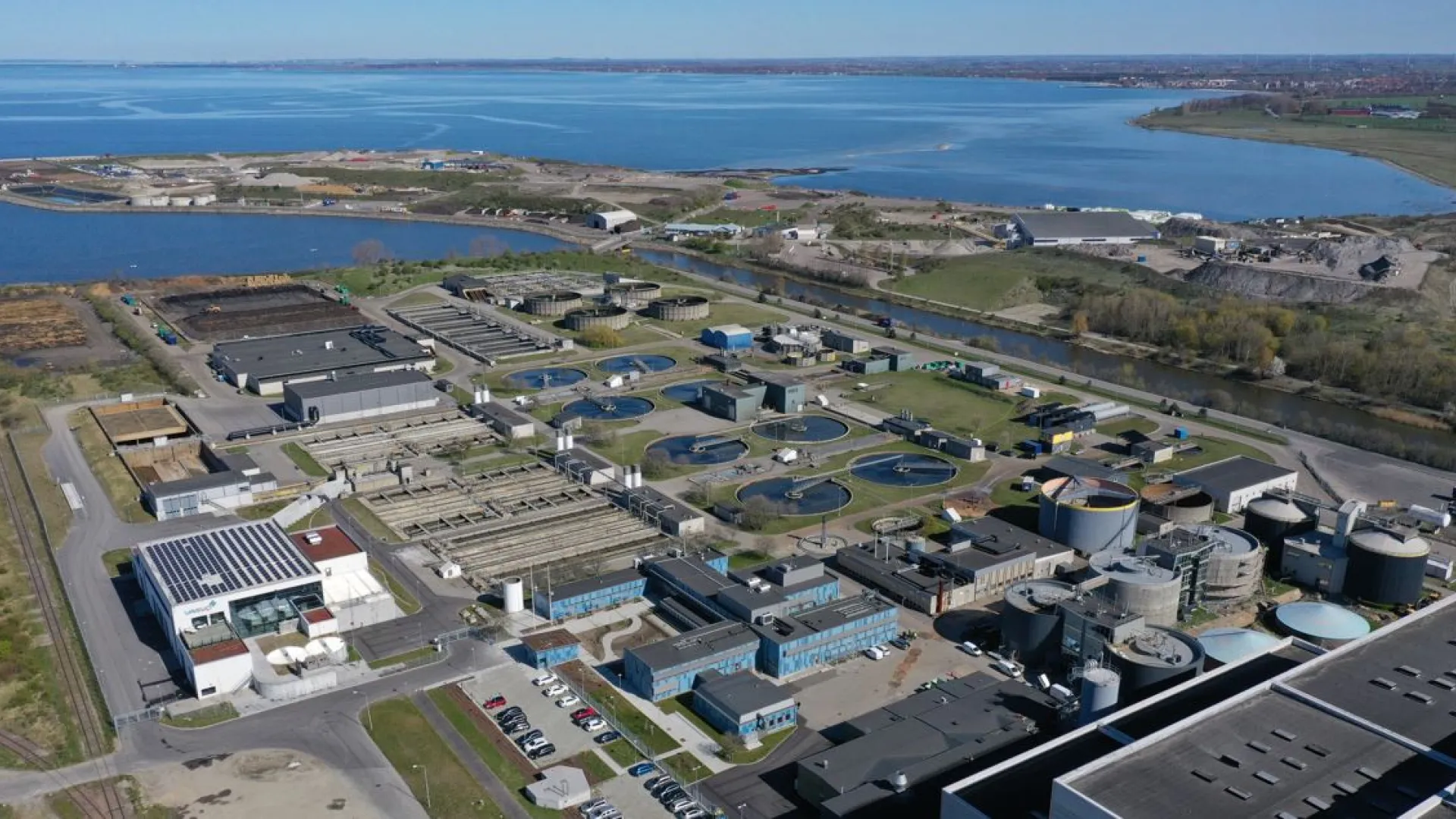
The Sjölunda wastewater treatment plant was completed in 1963, and has since been expanded in various phases. The plant has now reached a point where further renovations are no longer considered a long-term sustainable solution. In addition, capacity needs to increase significantly to handle a larger amount of wastewater from the municipalities participating in MAXIMA.
Why is the new wastewater treatment plant being built on the same site?
VA SYD has investigated the location of a new wastewater treatment plant and concluded that the best location is on the same site as the existing Sjölunda wastewater treatment plant, in the North Harbour in Malmö. This is also supported by dialogue with the City of Malmö when alternative locations were looked at.
- No housing is planned in the area in question
- Several industries are located nearby, which provides an opportunity to develop circular economy collaborations
- Due to its size, Öresund is able to receive the treated wastewater
How much capacity will the Sjölunda wastewater treatment plant have and how long will it last?
Sjölunda wastewater treatment plant currently receives wastewater from 350,000 people. When MAXIMA is completed, Sjölunda wastewater treatment plant is estimated to be able to treat wastewater from approximately 700,000 people or 820,000 person equivalents* with the possibility of expanding for an additional 100,000 person equivalents.
According to the plan, the entire plant, when commissioned in 2035, will be able to handle an estimated flow until 2045, which is as far as there are relatively reliable forecasts for population growth in the region. The new wastewater treatment plant will be built to enable upgrade and change in line with the development of new technology and new needs.
*A person equivalent is the amount of pollutants that corresponds to the average emission per person per day (from households, industry, service facilities, etc.).
Why is MBR being introduced as a new treatment technology?
After an in-depth evaluation of possible technologies, the membrane bioreactor (MBR) turned out to be the best alternative. The guiding principle in the evaluation has been how we best meet our project goals linked to operational reliability, flexibility, climate and energy efficiency, but also resource efficiency and the work environment. In addition to the project goals, we take into account the entire construction process, and the conditions that we will build at the same time as existing operations are running at the same location.
MBR is a biological process where the purified water is separated from the sludge using membranes with extremely small pores that only let the purified water through – compared to today's activated sludge process, where this is done using gravity. MBR provides high purification efficiency, and is at the same time a surface-efficient process because it requires limited space.
How is the facility secured against erosion and sea level rise?
The current detailed plan for the area by the City of Malmö forms the basis for assessing what type of protection against climate change is needed. The ground level within the facility will be raised, and the goal is that a rebuilt Sjölunda wastewater treatment plant will be protected against the expected sea level rise estimated until the year 2100. Along the shoreline, new erosion protection in the form of a dike with larger stones will be built to break the eroding impact of wave power.
What benefits do the new outfall pipelines provide, and how will they effect the aquatic environment?
The new outfall pipelines release the treated water further out into more flowing water (approximately 4 kilometers out, compared to today's 2 kilometers), which increases dilution. Reduced eutrophication in Lommabukten particularly benefits the occurrence of eelgrass, which is a species with important ecological functions.
Read more about the outfall pipelines here
The outfall pipelines will be laid on the seabed. Closest to land, they will be laid in a dredged channel and further out they will be secured with piles to avoid being affected by current forces. Since the pipes will not emerge above the seabed until approximately 2 kilometres from land, normal use of the area for example for recreational boats, will not be restricted. However, anchoring will be prohibited within the boundaries of the facility, which will be marked on nautical charts.
How does VA SYD ensure that the Sjölunda wastewater treatment plant remains modern over time?
During the period it takes to complete MAXIMA, technological development continues, especially when it comes to digitalisation, which we are making room for in the planning. Starting in 2035, the treatment plant will meet new and stricter environmental requirements and the capacity needs of the municipalities of Burlöv, Lomma, Lund and Malmö until 2045, but the design and layout will be adapted for ongoing upgrades even after that.
Wastewater tunnels
What are the advantages of wastewater tunnels over pipes?
- The tunnels in MAXIMA will have a diameter of 2–5 meters and be drilled to a depth of 20–35 meters, with a slope that allows the wastewater to be transported by gravity.
- The tunnel drilling is barely noticeable above ground, and the impact on the surroundings is mainly at the tunnel shaft.
- The size and storage capacity of the tunnels mean that society can meet the needs of growing cities and climate change for many decades to come.
A pipe is buried shallowly at a depth of 3–5 meters and requires a larger working area along the entire route. A pipe also means that pumping stations must be built along the route to pump the water forward.
Tunnels for wastewater are becoming increasingly common in densely populated communities and regions with population growth. In the Nordic countries, there are existing and planned wastewater tunnels in, among others, Copenhagen, Stockholm, Gothenburg, Oslo and Helsinki.
Why is a wastewater tunnel needed under Malmö?
The system that currently pumps and conducts wastewater from households and businesses in Malmö to the Sjölunda sewage treatment plant is old, with parts dating back to the early 20th century. Malmö needs a new system to handle population growth, new environmental requirements and climate adaptation. The sourthern wastewater tunnel gives Malmö the opportunity to grow and develop sustainably as a city.
How will Malmö Canal be affected?
With a wastewater tunnel under the city, the pollution of Malmö Canal will be significantly reduced. Above all, the need for overflow (discharge of untreated wastewater due to the system being full), which occurs during heavy rains, is minimised. A wastewater tunnel also reduces emissions to Industrihamnen and the Sege å.
Can the southern wastewater tunnel prevent flooding during heavy rains?
The wastewater tunnel reduces the risk of flooding out in the community and in basements in the areas adjacent to the three large pumping stations Turbinen, Rosendal and Spillepengen.
To reduce the negative effects of torrential rain and increased water levels throughout Malmö, we at VA SYD and the City of Malmö are working according to a joint action plan – Together we make room for the water.
Why is a wastewater tunnel needed from Lund?
By building the northern wastewater tunnel, the municipalities of Burlöv, Lomma and Lund, as well as parts of Staffanstorp, can be connected to the regional wastewater treatment system MAXIMA, which gives these municipalities the opportunity to grow and develop in a sustainable way.
What is the basis for the location of the route for the northern wastewater tunnel?
The location of the shaft and tunnel route is the result of thorough investigations to have as little impact as possible on the surroundings.
- The chosen tunnel route is the shortest possible in terms of connection to the existing pumping stations that are nodes for the sewage network at ground level, and is therefore the most time- and cost-effective.
- In this way, no investments are needed in long pressurised sewer pipes and pumping stations to connect the existing wastewater network, which would also have caused disruption to road users and farmers in agricultural land. Minimising the need for materials and the amount of tunnel boring materials also results in fewer transports.
How much wastewater can be stored in the tunnel system, and what benefits does it provide?
The wastewater tunnels that are part of MAXIMA can store wastewater equivalent to two Turning Torso (180,000 cubic meters), which minimises the need for overflows and protects the community against flooding during torrential rains. Another major advantage is that the wastewater can then be pumped up to the Sjölunda wastewater treatment plant at a rate that is optimal for the plant's capacity and function, which provides both safe and energy-efficient operation.
Can wastewater tunnels prevent expansion or other activities above ground?
No, a wastewater tunnel promotes further urban development above ground, for example, new areas can be built because the wastewater treatment system can receive larger amounts of wastewater. Another major advantage compared to pipeline expansion is that the land can continue to be used for agriculture.
How are residents affected by the shafts during the construction period?
Many of the shafts are located in industrial or other areas without housing, which means the risk of noise disturbances from these shafts is low. Other shafts are located in residential areas, where there is a risk of varying levels of noise disturbance during the construction period. Calculations show that the Swedish Environmental Protection Agency’s noise level requirements will not be exceeded in most cases, thanks to the protective measures that will be taken to limit noise disturbances. At the tunnel's start shafts, transport will also take place continuously throughout the entire tunnel-boring period.
Work at the shafts is carried out in different phases spread over the entire construction period. The total time for work activities at each shaft is 2–5 years, and the noisy activities last from 3–6 months, depending on the size of the shaft. The noisiest activities will be scheduled during daytime (07:00–19:00), but some tasks may still need to be performed during the evening or night. Before noisy work is carried out, VA SYD will notify nearby residents. Updated information is also always available on VA SYD’s website under “Operational information.”
How are residents affected by the tunnel boring?
During the construction period, it may be possible to hear a faint low-frequency structure-borne noise* for approximately one week when the tunnel boring machine passes far down under the building. The tunnel boring machine advances approximately 15–20 meters per day. Once the tunnel boring machine has passed the building, no further disturbance will occur, neither during the construction phase nor the operational phase.
*Structure-borne noise is sound that travels from an activity (such as tunnel boring) through solid materials (such as hard soil or rock) into a building’s structural frame, where it generates a low-frequency sound.
How is the groundwater affected by the tunnel construction?
During the construction of a shaft, the groundwater level needs to be temporarily lowered to prevent excessive upward pressure until the shaft’s bottom has been secured. This is done by pumping out and diverting groundwater, thereby reducing uplift forces. The extracted water will be tested for contaminants and managed according to the results.
If there are properties nearby that risk experiencing settlement due to the lowering of the groundwater level, this will be prevented by pumping water back into the ground to maintain a sufficiently high groundwater level in the affected area (a process known as infiltration). Monitoring programs will be established with measurement points on properties at risk of settlement.
When the groundwater level drops, geothermal wells within the affected area may not function optimally. This is regulated through financial compensation, determined by the Land and Environment Court, to the property owners.
By using the EPB-TBM (Earth Pressure Balance – Tunnel Boring Machine) method with segment lining, the tunnel will be constructed to be completely watertight as the excavation progresses. If additional sealing is required — for example, in fracture zones in the limestone — cement will be used as a sealing material. The risk of toxic substances leaking into the surrounding environment is therefore negligible.
The northern tunnel is planned to pass partially through the Alnarpssänkan, but well above the depth at which drinking water is extracted. Therefore, neither the availability nor the quality of drinking water will be affected.
Once the tunnels and shafts have been completed, and MAXIMA becomes part of the regular water and wastewater system, there will be no impact on groundwater levels or quality.
How will the tunnels be inspected and maintained during operation?
The wastewater tunnels are designed to be self-cleaning and not require inspections or repairs that would involve people having to enter the tunnel. Future inspections, servicing, maintenance, and any necessary repairs will be carried out using camera surveillance and remotely operated equipment, via the shafts that will be constructed along the route to connect to the existing sewer network.
The wastewater flows efficiently by gravity, and if anything were to become lodged along the way, the next major rainfall would resolve the problem. The design of the system also ensures that flooding should not occur in the tunnels. However, the shafts will have descent facilities for handling extreme situations.
How will gases such as hydrogen sulphide be handled in the tunnels?
Through natural processes in wastewater, substances are broken down, and new ones are formed. Some substances are in gaseous form and can be harmful to health, for example hydrogen sulphide. Therefore, the wastewater tunnels have ventilation systems ensuring that gases like that are vented out in a safe manner.
Sjölunda pumping station
Why is the Sjölunda pumping station needed?
Since the wastewater tunnels are built with a slope that enables transport by gravity, for a self-cleaning effect and low energy consumption, the wastewater must be collected at a considerable depth in the pumping station – and then pumped up to the Sjölunda wastewater treatment plant. With the help of advanced technology and the tunnels' storage capacity, the flow through the pumping station and into the treatment plant can be controlled proactively based on different scenarios, such as incoming rain. This provides the opportunity for both energy and capacity optimisation, and thus an efficient treatment process.
What function and capacity will the Sjölunda pumping station have?
The Sjölunda pumping station is being built to receive wastewater from the two wastewater tunnels and pump it approximately 35 meters up to the Sjölunda wastewater treatment plant, with a maximum capacity of 10 m3/s.
How is the operation of the Sjölunda pumping station secured against interruptions?
Sjölunda pumping station is being built redundantly, so that one part can be closed and allow for maintenance, while the other side is in operation. The pumping station is also equipped with backup power that continues to supply the pumping station with electricity in the event of a failure of the regular grid.
Pressurised transfer pipe from Borgeby
Why is a transfer pipe from Borgeby needed?
The pressurised transfer pipe from Borgeby connects to the northern tunnel at the shaft in Hjärup, so that wastewater from Bjärred can be transported to the Sjölunda wastewater treatment plant. The pipe will be built when the other parts of MAXIMA are completed, which is why not all the details are quite in place yet.
How long and large will the pipe be?
The transfer pipe will be 15 kilometers long, and located 1.7─2.0 metres underground. It will be approximately 40─50 centimetres in diameter, and there will possibly be two parallel lines. Along the route, 2─3 pumping stations will be needed, which together with the gravity principle will transport the wastewater forward.